Storage & Climate Control
Conservation relies heavily on environmental stability. Proper storage safeguards against the invisible threats of temperature fluctuations, humidity, and light exposure.
The Importance of Environmental Stability
Whether objects are resting in a facility for two weeks before transit or held in long-term archival conditions for several years, the environment dictates their preservation. Rapid fluctuations in temperature and relative humidity cause organic materials to expand and contract. Over time, this microscopic movement leads to cracking veneers, warped panels, and weakened joinery.
Climate-controlled environments are not simply "air conditioned" spaces. They are carefully calibrated zones designed to maintain environmental stability. Rather than enforcing a rigid single temperature, conservation principles emphasize slow, minimal variations. Maintaining a steady relative humidity is arguably more critical than temperature alone in preventing the desiccation or swelling of historic materials.
How Different Materials Respond
Collections rarely consist of a single material, and mixed-material objects present complex storage challenges:
- Wood: Highly hygroscopic, wood absorbs and releases moisture. Too dry, and glue joints fail while panels crack. Too damp, and mold or pest infestation becomes a risk.
- Paper and Textiles: Extremely vulnerable to both light exposure and humidity. They require dark storage and highly stable relative humidity to prevent foxing (mold spots) or fiber degradation.
- Metal: While generally robust, metals like iron are prone to corrosion if humidity exceeds specific thresholds, whereas bronze can develop bronze disease in damp, unstable environments.
- Leather: Requires moderate humidity. If too dry, historic leather becomes brittle and powderizes. If too wet, it acts as a substrate for mold.
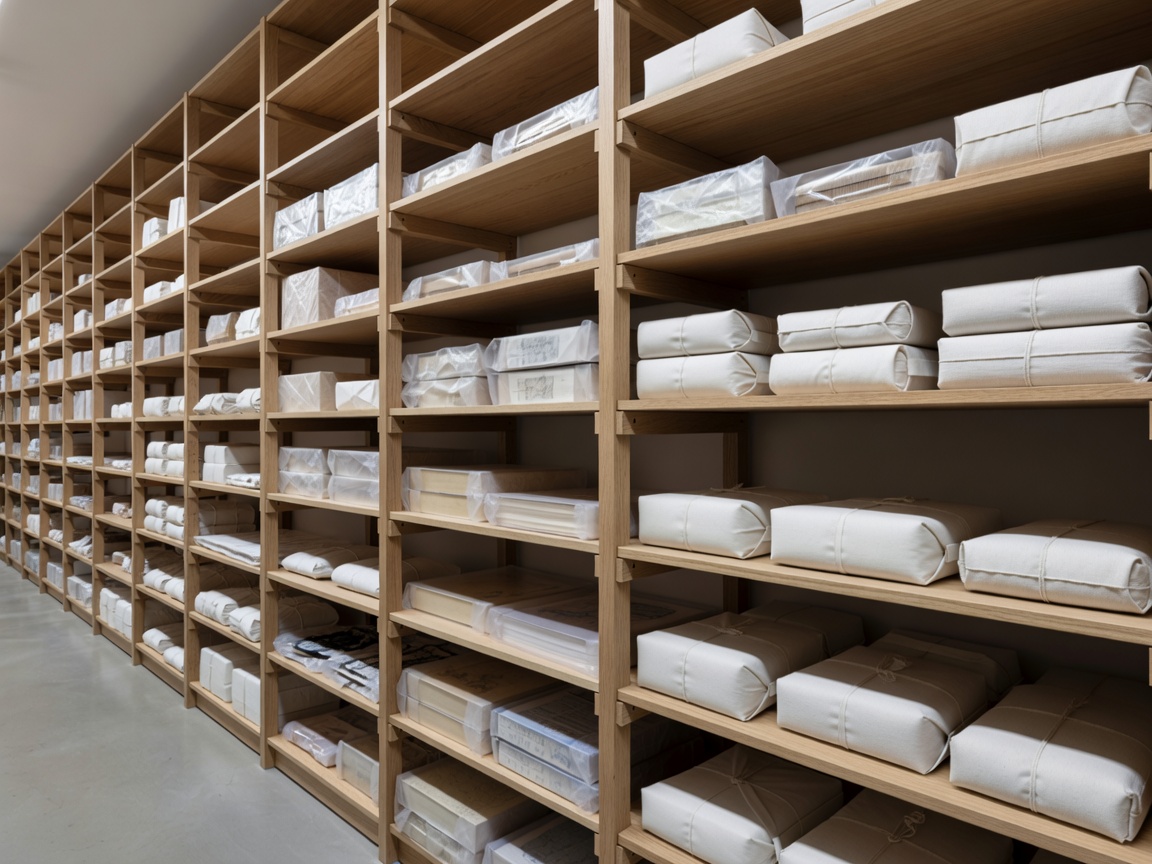 Fig 4. Objects elevated from the floor and draped with breathable protective covers.
Physical Storage Practices
Beyond the air itself, physical storage methodology is vital. Dust management and pest prevention are essential components of long-term preservation. Items should never be placed directly on concrete floors; safe shelving or raised dunnage is mandatory to protect against potential moisture wicking or localized flooding.
Furniture positioning is equally important. Large cabinets or armoires should rest evenly on their feet to prevent structural torsion over time. Protective covers must be breathable—using non-woven textiles like Tyvek or washed cotton—to prevent dust accumulation while allowing the object to acclimatize to the ambient environment.
Inventory and Access Planning
A premium storage solution includes rigorous collection documentation. A robust inventory system ensures that items can be located, audited, and retrieved without unnecessarily disturbing adjacent objects. When placing a collection into storage, future access planning must dictate the physical layout: items likely to be retrieved first should be placed near the access aisles, reducing the handling risk for the rest of the collection.
Require Secure Storage?
Discuss the environmental and spatial requirements for your pieces.
Contact Coordination