Specialist Transport Services
Moving fragile objects, fine furniture, and entire private collections requires entirely different procedures than standard commercial freight. We plan every movement with precision.
Understanding Specialist Antique Transport
There is a vast difference between ordinary freight movement and specialist antique handling. Ordinary freight focuses on speed, volume, and standardized palletization. Specialist antique transport, by contrast, prioritizes structural integrity, vibration reduction, climate awareness, and meticulous physical handling. Whether transferring a seventeenth-century armoire or moving an entire gallery exhibition, every route must be carefully evaluated to minimize physical stress on the objects.
Single-Item Movements vs. Multi-Item Collections
Handling a single masterpiece presents distinct challenges from moving a fifty-piece residential collection. For single items, the focus is entirely on custom crating, localized climate buffering, and direct-route secure transit. A multi-item collection requires complex sequencing: determining which items are loaded first, how crates are nested within the vehicle to prevent load shift, and coordinating precise unloading schedules at the destination.
Estate movements and gallery transfers often necessitate dedicated transport vehicles. A dedicated transport ensures the vehicle is entirely reserved for your collection, allowing for customized temperature settings and uninterrupted, direct-route driving. Shared transport—while highly efficient for single items or smaller suites of furniture—requires objects to be incredibly well-crated to withstand the logistical realities of multiple loading and unloading stops across Europe.
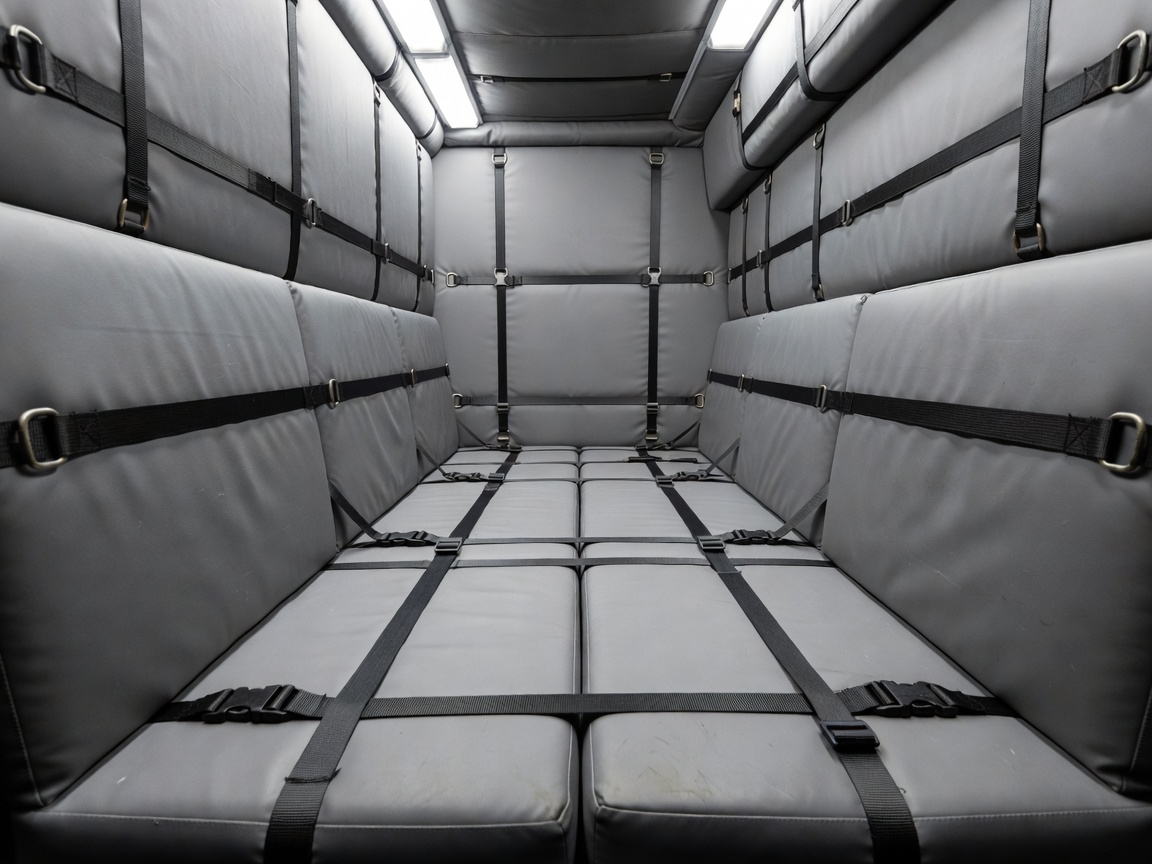 Fig 1. Padded interiors and strap-points are essential for securing non-standard objects.
Loading, Handling, and Unloading Procedures
The majority of transport damage does not occur on the highway; it occurs during the loading and unloading phases. Specialist handlers approach objects differently than traditional movers. We lift rather than drag. We assess the weakest points of a piece of furniture—such as the joints of a chair or the original casters of a Victorian sofa—before determining the grip points.
When navigating historic European properties, staircases are often narrow, and modern freight elevators are frequently non-existent. Handling procedures require detailed access surveys before the truck ever arrives, ensuring that objects can actually turn the required corners without risking surface abrasion.
Documentation and Insurance Considerations
Rigorous documentation is the backbone of specialist transport. Prior to transit, condition reports should be generated, noting existing patina, previous repairs, and inherent structural weaknesses. This documentation informs the handlers how to interact with the object and serves as a baseline for insurance purposes.
While standard moving insurance often covers basic liability by weight, antique transport requires specialized fine-art and collection insurance. Valuations must be established prior to loading, and the transport method must often meet specific underwriter requirements regarding vehicle alarms, dual-driver mandates for long routes, and overnight secure parking provisions.
Require Specialist Transport?
Ensure your fragile items are moved with the proper methodology.
Contact Coordination